
By Mixolab Editorial Team
You’ve heard of the Margarita. But have you met her cooler, sharper cousin? This Paloma recipe introduces you to a fizzy grapefruit and tequila cocktail that’s lighter, brighter, and dangerously easy to love. Built for warm days and bold flavors, it skips the sugary mixers in favor of clean citrus and crisp soda. Think of it as a highball with Mexican soul.
The Tequila Drink You Didn’t Know You Were Missing
One sip, and you’ll understand why the Paloma is quickly becoming the go-to tequila drink for bartenders and home mixologists alike.
Let’s take that first step into what makes this cocktail so special. From grapefruit and lime to the perfect tequila pour, here’s everything you need to craft this beloved staple of Mexican drink culture that captures the essence of Mexico.
Ingredients for Paloma Drink
Here’s what you need to bring this simple, zesty cocktail to life. From the first citrus squeeze to the last salted rim, each ingredient plays a role in crafting the perfect balance.
- 2 oz blanco tequila (60 ml), 100% agave
- 2 oz fresh grapefruit juice (60 ml), such as ruby red
- 1/2 oz fresh lime juice (15 ml)
- 1/2 oz agave syrup or simple syrup (15 ml)
- 2 oz club soda or grapefruit soda for a classic feel (60 ml); fresh juice alone can be used with extra soda for balance
- Pinch of kosher salt for rimming the glass (optional)
- Ice cubes
- Grapefruit wedge, for garnish
Yield: 1 serving


Bar Tools You Will Need
Before you mix, make sure these essentials are within reach.
- Glass: Use a highball glass; tall and perfect for fizzy builds.
- Jigger: Essential for accurately measuring spirits.
- Cocktail Shaker: A Boston shaker is preferred by professionals for its secure seal and efficiency, while a Cobbler shaker is great for beginners due to its built-in strainer.
- Strainer: Use a fine mesh strainer to remove ice shards and achieve a perfectly smooth finish.
- Citrus Juicer: Helps extract fresh lime juice.
- Bar Spoon: Use to gently stir after pouring, ensuring the ingredients are evenly integrated.
- Salt Rimmer: A must-have tool for evenly coating the rim with salt. If unavailable, use a small plate with seasoning.

How To Make A Paloma
Follow these easy steps to mix a Paloma that feels like it came straight from a beachfront bar in Jalisco.
Step 1
Prepare the Glass: Rub a grapefruit or lime wedge around the rim of a highball glass. Dip the rim into kosher salt if desired, then fill the glass with ice to chill.Step 2
Measure and Mix: Add 2 oz or 60 ml of tequila, 2 oz or 60 ml of fresh grapefruit juice, 1/2 oz or 15 ml of lime juice, and 1/2 oz or 15 ml of agave syrup to a cocktail shaker. Add a pinch of salt if preferred.Step 3
Shake Lightly: Toss in a few ice cubes and shake for 5 seconds to awaken the flavors without diluting them. This integrates the citrus and sweetener with the tequila without overly diluting.Step 4
Pour and Top: Strain the mixture into your prepared glass over fresh ice. Top with 2 oz or 60 ml of chilled club soda or grapefruit soda (or grapefruit soda like Jarritos for a nostalgic touch).Step 5
Garnish and Serve: Garnish with a grapefruit wedge or lime wheel. Serve immediately and enjoy.Recipe Variations Worth Trying
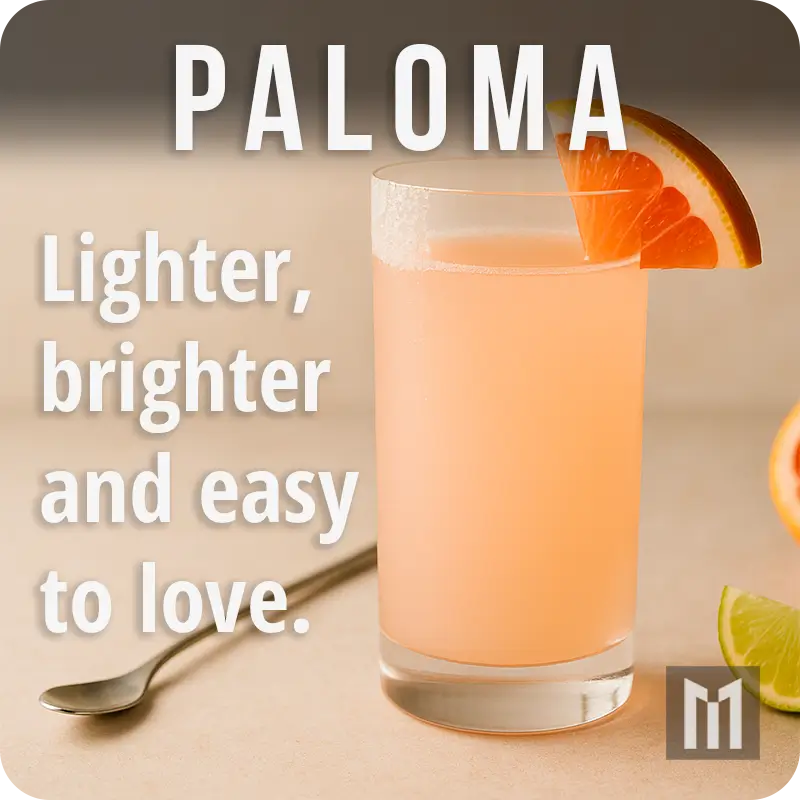
Looking to switch things up? Try these classic bartender-approved variations:
Spicy Paloma
Infuse your tequila with sliced jalapeños (15 minutes max). Add a Tajín rim and a chili-salt sprinkle for a fiery twist.
Mezcal Paloma
Swap tequila with mezcal for a smoky depth. The result is lean, earthy, and complex—qualities that make it a favorite among modern mixologists.
Frozen Paloma
Blend tequila, grapefruit juice, lime juice, agave syrup, and ice until slushy. Perfect for poolside lounging.
Food & Occasion Pairings
The perfect Paloma isn’t complete without the right dish on the side. These fresh and flavorful pairings enhance every sip, from smoky tacos to citrus-kissed seafood.
- 🦐 Grilled Shrimp Tacos: The grapefruit acidity cuts through smoky, spicy shellfish with ease.
- 🌽 Elote (Mexican Street Corn): Salt and citrus elevate the creamy cotija and charred kernels beautifully.
- 🐟 Ceviche or Tuna Tartare: Zesty raw seafood and a grapefruit-forward cocktail are a match made in culinary heaven.
- 🥪 BBQ Chicken Sliders: The bold barbecue notes are balanced by the cocktail’s citrus fizz.
When to Serve a Paloma Cocktail
- 🍊 Brunch Moments: Use fresh ruby red grapefruit for a softer, fruit-forward flavor profile.
- 🍹 Batch Parties: Mix tequila, citrus, and syrup ahead of time, then top with soda before serving.
- 🫙 Outdoor Gatherings: Serve in mason jars with reusable straws for a casual, eco-friendly vibe.
Craving something zesty and cold? This bold beer cocktail made with lime, hot sauce, and light Mexican lager is a refreshing way to unwind. Try the full Michelada recipe here 🍋🍸
Paloma Drink FAQs
What Tequila Is Best for a Paloma?
A Paloma cocktail traditionally uses blanco tequila made from 100% agave.
Can you use fresh grapefruit juice instead of soda in a Paloma?
Yes, you can use juice squeezed from grapefruit instead of soda, but adding a splash of club soda for balance and effervescence is best. This combination gives you the brightness of real juice with the refreshing fizz of a classic Paloma.
How strong is a Paloma cocktail?
A standard Paloma has an ABV of 10–12%, depending on your tequila pour and soda volume.
Does a Paloma glass have a salted rim?
Usually, yes. A Paloma is often served with a salted rim to brighten and balance its citrusy flavor.
Is a Paloma sweeter than a Margarita?
Not typically. The Paloma leans more tart and fizzy, while Margaritas are often sweeter due to triple sec.
The Before we wrap up, let’s take a step back and explore where this refreshing classic comes from. The Paloma’s story is as vibrant as its flavor. And it’s rooted in authentic Mexican cocktail tradition.

The Iconic Mexican Cocktail Everyone’s Finally Talking About
The Paloma cocktail may not have the fame of a Margarita, but it’s arguably the more authentic Mexican refresher. As highlighted in Death & Co’s Cocktail Codex, the Paloma delivers a balance of acidity, bitterness, and carbonation that’s tough to beat.
Believed to be named after the Spanish word for “dove,” the Paloma gained traction mid-20th century, especially in Western Mexico where grapefruit soda and tequila were readily available. Bartenders have since elevated the classic Paloma with fresh citrus and refined syrups, transforming it from a humble highball into a craft cocktail icon.
Expect a citrus-forward nose, zippy lime on the tongue, and a silky effervescence that dances across your palate.
Craving more cocktail recipes? Explore our blog for inspired twists and expert tips.